
Not everyone who discovers your business is ready to buy from you immediately. People move through a journey — from first hearing about you, to considering your offer, to finally making a decision.
A marketing funnel is the framework that maps this journey. Understanding it helps you create the right message for the right person at the right stage — so you stop losing potential customers at points where better strategy would have kept them moving forward.
What Is a Marketing Funnel?
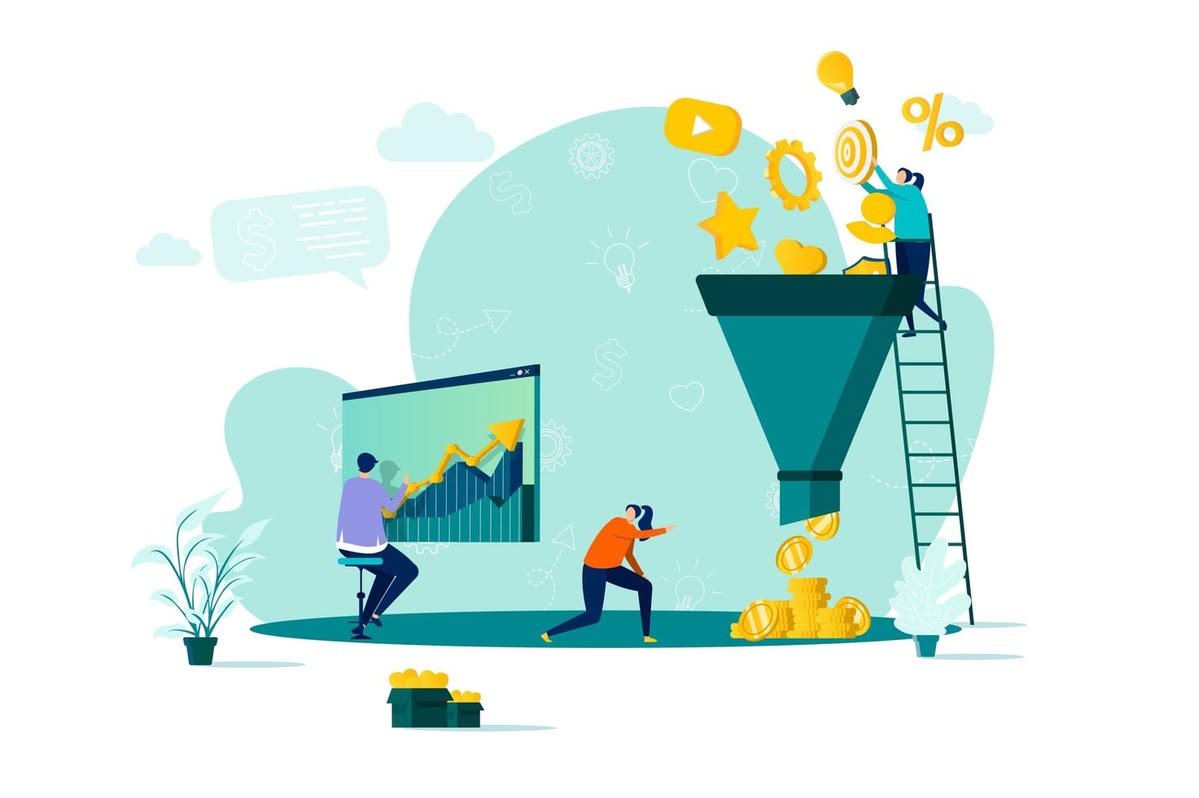
A marketing funnel is a model that represents the stages a potential customer goes through before making a purchase. The term “funnel” reflects the reality that many people enter at the top (awareness), fewer reach the middle (consideration), and fewer still convert at the bottom (purchase).
The three core stages are:
– Top of funnel (TOFU) — Awareness: The prospect discovers your brand for the first time
– Middle of funnel (MOFU) — Consideration: They’re evaluating whether your solution fits their need
– Bottom of funnel (BOFU) — Conversion: They’re ready to decide and take action
Some models extend the funnel further to include retention and advocacy — turning customers into repeat buyers and referral sources.
Why Does the Funnel Matter for Small Businesses?
Most small businesses market as if everyone is at the bottom of the funnel — ready to buy immediately. They run promotions, push sales messages, and wonder why conversion rates are low.
The funnel framework shifts your thinking. It helps you recognize that:
– A first-time website visitor needs education, not a sales pitch
– A person who has downloaded your free guide needs nurturing, not a hard close
– A repeat customer needs retention strategies, not acquisition messaging
When you match your content and messaging to where someone is in their journey, you dramatically improve how efficiently your marketing converts.
Top of Funnel: Creating Awareness
At this stage, your goal is visibility. The prospect doesn’t know who you are yet — your job is to get in front of them and make a strong first impression.
Top-of-funnel marketing includes:
– SEO and blog content that answers questions your ideal customer is searching for
– Social media content that educates, entertains, or inspires without asking for anything
– Paid social ads targeting cold audiences based on demographics and interests
– YouTube videos or podcasts that build awareness of your expertise
– PR and collaborations that put your brand in front of new audiences
The key at this stage is value without expectation. You’re not selling — you’re being useful.
Middle of Funnel: Building Consideration
A prospect has discovered your brand and shown some interest. Now they’re evaluating you — comparing you to competitors, looking for proof that you can solve their problem, and deciding whether to trust you.
Middle-of-funnel marketing includes:
– Lead magnets (free guides, templates, checklists) that capture email addresses and begin a deeper relationship
– Email nurture sequences that deliver value over time and build familiarity
– Case studies and testimonials that show real results for real clients
– Webinars or free consultations that demonstrate expertise directly
– Retargeting ads that keep your brand visible to people who have already visited your site
At this stage, your job is to reduce doubt and build enough trust that the prospect is ready to take the next step.
Bottom of Funnel: Driving Conversion
The prospect is ready to decide. They’ve done their research. Now your job is to make it easy and compelling for them to choose you.
Bottom-of-funnel marketing includes:
– Clear, persuasive service or product pages with strong calls to action
– Pricing transparency that removes uncertainty
– Limited-time offers or incentives that create urgency
– Free trials or consultations that reduce the risk of committing
– Direct follow-up from your sales team or automated email sequences
– Strong social proof — testimonials, reviews, and case studies positioned at decision points
At this stage, friction is your enemy. Make the path from interest to purchase as smooth as possible.
Beyond the Funnel: Retention and Advocacy
A customer who buys once is valuable. A customer who buys repeatedly and refers others is transformative for a small business.
After the conversion, focus on:
– Onboarding experiences that ensure new customers get immediate value
– Follow-up emails that check in and offer support
– Loyalty rewards or exclusive offers for repeat customers
– Referral programs that incentivize word-of-mouth
– Review requests that build your public reputation
Many businesses spend all their marketing budget acquiring new customers while neglecting the customers they already have. Retention is often the highest-ROI activity available.
How to Apply the Funnel to Your Business
Start by auditing where your current marketing sits. Most small businesses are either:
– Entirely focused on bottom-of-funnel (too salesy, not enough awareness)
– Entirely focused on top-of-funnel (lots of content, no conversion path)
A balanced funnel covers all three stages with intentional strategies and content. Map out what you currently have at each stage, identify the gaps, and prioritize filling them.
Final Thoughts
The marketing funnel is not a rigid formula — it’s a lens for understanding your customer’s journey. When you use it to guide your strategy, your marketing becomes more targeted, more empathetic, and significantly more effective.
At Define Digital Edge, we help businesses build full-funnel marketing strategies that attract the right audience, nurture them effectively, and convert them into loyal customers.