
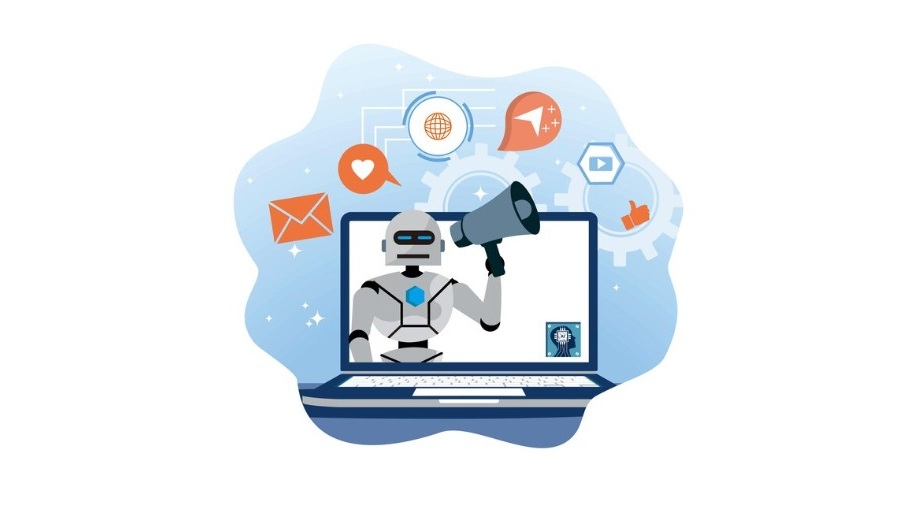
Running a small business means wearing a lot of hats. You’re managing operations, serving clients, and trying to keep your marketing consistent at the same time — which is genuinely difficult.
Marketing automation is how you solve the consistency problem without hiring a bigger team. It lets you set up systems that run in the background, sending the right message to the right person at the right time — automatically.
This guide explains what marketing automation is, how it works, and where to start if you’re new to it.
What Is Marketing Automation?
Marketing automation refers to software that handles repetitive marketing tasks automatically, based on predefined rules or triggers.
Instead of manually sending every email, following up with every lead, or posting every social media update, you set the system up once — and it runs without you.
Simple examples of marketing automation in action:
– A new subscriber joins your email list → they automatically receive a welcome email sequence
– A potential customer visits your pricing page three times → they automatically receive a follow-up email or retargeting ad
– A customer makes a purchase → they automatically receive a thank-you email with a cross-sell recommendation
– A lead fills out a contact form → they automatically receive a confirmation email while you receive an internal notification
All of this happens without you needing to be at your desk.
Why Marketing Automation Matters for Small Businesses
Large companies have always used automation — they have teams and budgets built for it. What’s changed is that the tools are now affordable and accessible enough for small businesses to get the same advantages.
The key benefits:
Time savings: Automating repetitive tasks frees you to focus on higher-value work like strategy, client relationships, and product development.
Consistency: Automation ensures no lead falls through the cracks. Every new subscriber gets their welcome email. Every abandoned cart gets followed up. Every inquiry gets an immediate response.
Scalability: A manual marketing process breaks when volume increases. An automated process handles 10 leads or 10,000 leads with equal efficiency.
Better timing: Automated messages are triggered by behavior — they arrive when the prospect is most engaged, not when you happen to remember to send something.
What Can Marketing Automation Do?
Marketing automation covers a wide range of tasks across different channels:
Email automation:
– Welcome sequences for new subscribers
– Lead nurturing sequences that educate prospects over time
– Abandoned cart recovery emails for eCommerce
– Post-purchase follow-up and review requests
– Re-engagement campaigns for inactive subscribers
CRM and lead management:
– Automatically score leads based on behavior (page visits, email opens, downloads)
– Assign leads to sales team members based on criteria
– Send internal notifications when a lead takes a key action
– Update contact records automatically based on interactions
Social media automation:
– Schedule posts in advance across multiple platforms
– Auto-publish content from an RSS feed or content calendar
– Trigger DM replies based on comments or keywords (within platform rules)
Ad retargeting:
– Automatically show ads to website visitors who didn’t convert
– Exclude existing customers from acquisition campaigns
– Trigger ads based on specific pages visited
Getting Started: Where to Begin
You don’t need to automate everything at once. The best approach is to start with the highest-impact, simplest automations and build from there.
Step 1: Set up a welcome email sequence
When someone joins your email list, they should automatically receive a series of two to three emails that introduce your business, deliver value, and invite them to take a next step. This is the single most impactful automation for most small businesses.
Step 2: Create a lead response automation
When someone fills out your contact form, they should receive an immediate acknowledgment email confirming their inquiry and setting expectations for when they’ll hear from you. This reduces anxiety and improves first impressions.
Step 3: Build a simple follow-up sequence for leads
If a lead doesn’t respond to your initial outreach, an automated follow-up sequence of two to three emails over the following week can significantly increase your conversion rate without any manual effort.
Tools Worth Knowing
Several platforms offer marketing automation features at small business-friendly price points:
– Mailchimp — Good for email automation at entry level (free tier available)
– ActiveCampaign — Strong automation, CRM, and email combined; from $15/month
– HubSpot — Comprehensive CRM with free automation features; paid plans scale up
– Brevo (Sendinblue) — Solid email and SMS automation with a generous free tier
– Zapier — Connects your existing tools to automate workflows between platforms
– Manychat — Social media DM automation for Instagram, Facebook, and WhatsApp
The right tool depends on your existing stack, your budget, and the complexity of the automations you want to run.
Common Mistakes to Avoid
Over-automating before you understand your audience: Automation amplifies your messaging — good or bad. Build your email sequences and workflows based on what actually resonates with real customers, not assumptions.
Setting it and fully forgetting it: Automation isn’t completely hands-off. Review performance regularly, update sequences when your offerings change, and monitor for broken workflows.
Making it feel robotic: The best automated messages feel personal and relevant. Use the recipient’s first name, segment your audience so messaging is targeted, and write in a human voice.
Final Thoughts
Marketing automation is not about replacing the human side of your business — it’s about removing the manual, repetitive tasks so you can show up more meaningfully where it matters. For small businesses, it’s one of the most powerful ways to compete with larger competitors without scaling your team.
At Define Digital Edge, we help businesses design and implement marketing automation systems that work — from email sequences to full CRM workflows.